
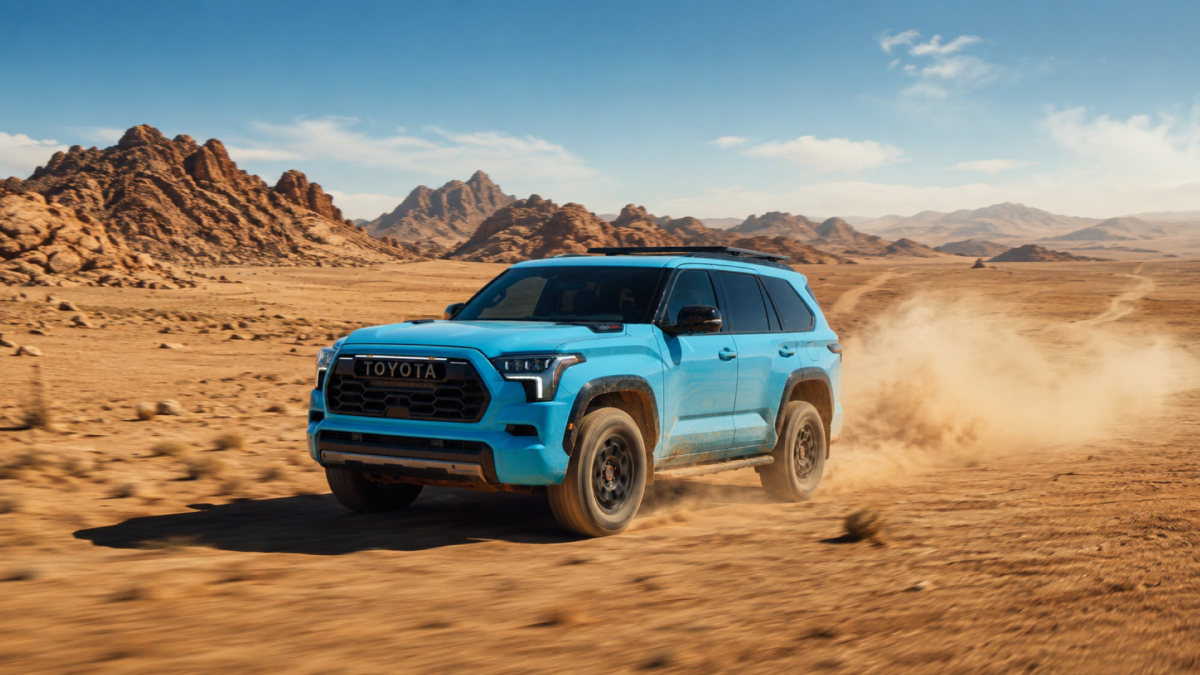
The full-size SUV segment is one of the most competitive arenas in the American automotive market, and Toyota has consistently positioned the Sequoia as a formidable contender. As we look ahead to the 2027 Toyota Sequoia release date, buyers and enthusiasts alike are eager to understand what updates, features, and improvements the Japanese automaker has in store for its flagship family hauler. In this comprehensive guide, we will break down everything currently known about the 2027 Toyota Sequoia release date, including expected timing, pricing, powertrain options, design changes, and how it stacks up against rivals like the Chevrolet Tahoe, Ford Expedition, and Nissan Armada.
When Is the 2027 Toyota Sequoia Release Date?
One of the most pressing questions on the minds of potential buyers is: when exactly will the 2027 Toyota Sequoia hit dealership lots? According to industry analysts and automotive publications, the 2027 Toyota Sequoia release date is expected to fall in the summer of 2026. This timeline aligns with Toyota’s typical model year rollout schedule, where new model year vehicles often arrive in showrooms several months before the calendar year they represent.
The Sequoia, which rides on the same platform as the Toyota Tundra full-size pickup truck, follows a production cycle that sees incremental updates rather than full generational overhauls on an annual basis. For the 2027 model year, early indications suggest that Toyota is planning a mid-cycle refresh rather than an all-new redesign. This means buyers can expect subtle exterior styling tweaks, potential interior upgrades, and possibly new technology features, while the core architecture and powertrain remain largely unchanged from the current third-generation model that debuted in 2023.
It is important to note that while the summer 2026 timeframe is the prevailing expectation for the 2027 Toyota Sequoia release date, Toyota has not yet issued an official announcement confirming the exact on-sale date. As with all automotive launches, production schedules can shift due to supply chain constraints, regulatory approvals, or strategic marketing decisions. Prospective buyers should monitor official Toyota communications and dealership updates as the anticipated launch window approaches.
Expected Pricing for the 2027 Toyota Sequoia
Pricing is always a critical factor for full-size SUV shoppers, and the 2027 Toyota Sequoia release date brings with it questions about cost. Industry estimates suggest that the 2027 Sequoia will carry a starting price of approximately $68,000 for the base SR5 trim level.
This represents a modest increase over the 2026 model year, consistent with inflationary pressures and the addition of new standard features.
The Sequoia is offered across several trim levels, each commanding a premium as you move up the ladder:
- SR5: The entry-level trim that still comes generously equipped with Toyota Safety Sense, a large touchscreen infotainment system, and the standard hybrid powertrain.
- Limited: Adds leather-trimmed seating, premium audio, and additional convenience features.
- Platinum: Brings luxury appointments such as ventilated front seats, a panoramic moonroof, and advanced driver assistance technologies.
- TRD Pro: The off-road-focused variant featuring FOX shocks, skid plates, and unique exterior styling elements.
- Capstone: The range-topping trim that competes with luxury SUVs, offering semi-aniline leather, open-pore wood trim, and a head-up display.
At the top end, a fully loaded 2027 Sequoia Capstone could approach or exceed $80,000, placing it in direct competition with premium offerings from American and German manufacturers. However, Toyota’s value proposition has always been its reputation for reliability, strong resale values, and lower total cost of ownership—factors that continue to justify the Sequoia’s pricing structure.
Powertrain and Performance: The i-Force Max Hybrid
A defining characteristic of the current-generation Sequoia is its exclusive use of hybrid powertrains—a bold move that distinguishes it from competitors still offering traditional V8 engines. For the 2027 model year, the Sequoia is expected to retain the i-Force Max hybrid system that has garnered praise for its balance of power and efficiency.
This powertrain combines a twin-turbocharged 3.4-liter V6 engine with an electric motor integrated into the transmission, producing a robust 437 horsepower and 583 lb-ft of torque.
These figures place the Sequoia among the most powerful vehicles in its class, delivering effortless acceleration whether merging onto highways or towing heavy trailers.
The hybrid setup is paired with a 10-speed automatic transmission and offers buyers a choice between rear-wheel drive and four-wheel drive configurations. Fuel economy estimates for the 2027 model are not yet finalized, but the current Sequoia achieves approximately 21 mpg in the city and 24 mpg on the highway—impressive numbers for a body-on-frame SUV that can seat up to eight passengers and tow up to 9,520 pounds.
There has been speculation within the automotive community about whether Toyota might reintroduce a V8 engine option for the 2027 model year, responding to consumer demand for the traditional eight-cylinder powerplant.
While these rumors have generated significant discussion on forums and social media, no official confirmation has emerged from Toyota’s engineering or marketing teams. The automaker appears committed to its hybrid-first strategy for the Sequoia, leveraging the i-Force Max system as a key differentiator that offers V8-like performance with superior fuel economy.
Design and Styling Updates for 2027
As a mid-cycle refresh, the 2027 Toyota Sequoia release date will likely bring evolutionary rather than revolutionary design changes. Spy photos and industry renderings suggest that Toyota designers are focusing on refining the SUV’s bold, upright silhouette that has defined the third generation.
Exterior Updates
Expect the 2027 Sequoia to feature a revised front fascia with a new interpretation of Toyota’s signature grille. The current model’s large, blocky grille may be slightly reshaped, with updated LED headlight signatures that incorporate more sophisticated daytime running light patterns. The lower bumper and air intake areas could also see aerodynamic optimizations that improve both efficiency and visual aggression.
At the rear, subtle changes to the taillight design and lower bumper trim are anticipated. The TRD Pro variant, in particular, may receive unique color options and graphic packages that reinforce its off-road identity. Wheel designs across the lineup are likely to be refreshed, with new alloy patterns ranging from 18 inches on base models to 22 inches on the Capstone trim.
Interior Enhancements
Inside the cabin, the 2027 Toyota Sequoia is expected to build upon the current model’s already impressive interior quality. The centerpiece will remain a large 14-inch touchscreen infotainment system running Toyota’s latest Audio Multimedia interface, which supports wireless Apple CarPlay and Android Auto.
Material upgrades are anticipated, particularly in higher trims, where Toyota may introduce new leather colors, real wood trim options, and enhanced ambient lighting. The Sequoia’s third-row seating—already among the most spacious in the segment thanks to its independent rear suspension—may see improved cushioning and adjustability.
Technology-wise, the 2027 model is likely to expand the availability of Toyota Safety Sense 3.0, the automaker’s suite of advanced driver assistance features. This includes pre-collision warning with pedestrian detection, adaptive cruise control, lane departure alert with steering assist, and road sign recognition. A 360-degree camera system and head-up display may become standard on more trims, enhancing both safety and convenience.
Trim Levels and Feature Availability
The 2027 Toyota Sequoia release date will see the return of a familiar trim hierarchy, though Toyota may shuffle standard and optional equipment to maintain competitiveness:
| Trim Level | Key Features |
|---|---|
| SR5 | i-Force Max hybrid, 8-passenger seating, Toyota Safety Sense, 14-inch touchscreen |
| Limited | Leather upholstery, power-folding third row, JBL audio, heated/ventilated front seats |
| Platinum | Panoramic moonroof, adaptive air suspension, premium leather, advanced park assist |
| TRD Pro | FOX internal bypass shocks, TRD skid plates, unique grille, off-road tires |
| Capstone | Semi-aniline leather, open-pore wood, head-up display, 22-inch wheels, exclusive badging |
The TRD Pro trim deserves special mention, as it has become a halo model for the Sequoia lineup. Designed for buyers who demand genuine off-road capability without sacrificing daily drivability, the TRD Pro features a 2.5-inch lift, specialized off-road shocks, and a terrain-select system that optimizes traction for mud, sand, rock, and snow. For the 2027 model year, this trim may receive additional color choices and exclusive interior accents that further distinguish it from the rest of the range.
How the 2027 Sequoia Compares to Competitors
Understanding the competitive landscape is essential when evaluating the 2027 Toyota Sequoia release date and what it means for buyers. The full-size SUV segment is populated by several strong contenders:
Chevrolet Tahoe and Suburban
GM’s full-size SUVs remain the segment sales leaders, offering a choice of V8 engines, a diesel option, and massive interior space. However, the Sequoia counters with its standard hybrid powertrain, superior fuel economy, and Toyota’s legendary reliability reputation. The Tahoe’s interior quality has improved significantly in recent years, but the Sequoia’s 14-inch touchscreen and premium materials in upper trims give it a tech-forward edge.
Ford Expedition
The Expedition features a twin-turbo V6 engine and an independent rear suspension that delivers excellent ride quality and interior space. Ford’s BlueCruise hands-free driving technology is a compelling feature, but the Sequoia’s i-Force Max hybrid produces more torque and offers better real-world fuel efficiency. The Expedition also lacks a true off-road variant comparable to the Sequoia TRD Pro.
Nissan Armada
Recently redesigned, the new Armada offers strong value and a luxurious interior, particularly in its higher trims. However, it lacks a hybrid powertrain option, and its towing and payload capacities fall short of the Sequoia’s capabilities. Toyota’s dealer network and resale value advantages also work in the Sequoia’s favor.
Jeep Wagoneer
The Wagoneer brings genuine luxury and off-road pedigree to the segment, with an available V8 and air suspension. Yet its price escalates quickly, and its reliability track record is not yet established. The Sequoia offers a more proven ownership experience at a lower entry price point.
Fuel Economy and Environmental Impact
One of the most compelling arguments for the Sequoia’s hybrid-only strategy is its environmental benefit. Full-size SUVs have historically been criticized for their poor fuel economy and high emissions. By making the i-Force Max hybrid standard across all trims, Toyota is positioning the Sequoia as a more responsible choice for buyers who need three-row capability but want to minimize their carbon footprint.
The current Sequoia’s EPA ratings of 21 city / 24 highway / 22 combined mpg represent a significant improvement over the previous generation’s naturally aspirated V8, which struggled to achieve 15 mpg in mixed driving.
For the 2027 model year, Toyota may implement incremental efficiency gains through software optimization and aerodynamic improvements, though major breakthroughs are unlikely without a full platform redesign.
For families and fleet buyers who log high annual mileage, the fuel savings over a traditional V8 competitor can amount to hundreds of dollars per year—an important consideration as fuel prices remain volatile.
Towing and Capability
Despite its hybrid powertrain, the Sequoia does not compromise on capability. The 2027 Toyota Sequoia is expected to maintain a maximum towing capacity of 9,520 pounds when properly equipped—sufficient for large travel trailers, horse trailers, and boat trailers.
Key towing features include:
- Integrated trailer brake controller
- Trailer sway control
- Tow/haul mode that adjusts transmission shift points and throttle response
- Available air suspension that automatically levels the vehicle when hitched
- Backup guidance system specifically calibrated for trailer maneuvering
The Sequoia’s body-on-frame construction, shared with the Tundra pickup, provides the robust foundation necessary for heavy-duty towing. The hybrid powertrain’s abundant low-end torque—delivered instantly by the electric motor—makes launching with a heavy trailer feel effortless compared to naturally aspirated engines that must build revs to reach peak torque.
What to Expect at Dealerships
As the 2027 Toyota Sequoia release date approaches, prospective buyers should prepare for a competitive purchasing environment. The full-size SUV segment remains strong, and Toyota’s reputation for quality means that Sequoia models—particularly in desirable trims like the TRD Pro and Capstone—may command premiums or have limited availability during the initial launch phase.
Buyers interested in the 2027 Sequoia should consider the following steps:
- Contact local dealerships in early 2026 to express interest and inquire about allocation lists.
- Review financing options, as interest rates and Toyota’s promotional offers will influence total cost.
- Compare trim levels carefully to ensure the selected configuration meets both needs and budget.
- Consider trade-in timing, as used vehicle values fluctuate and can impact the net cost of upgrading.
Toyota’s certified pre-owned program also offers an alternative for buyers who cannot secure a new 2027 model or prefer to avoid the initial depreciation hit. However, given the current generation’s relatively recent introduction, CPO inventory may remain limited.
The Future of the Sequoia Beyond 2027
Looking past the 2027 Toyota Sequoia release date, industry observers anticipate that a full generational redesign could arrive around the 2029 or 2030 model year. This next-generation Sequoia may incorporate Toyota’s latest electrification strategies, potentially including a plug-in hybrid variant or even a fully electric powertrain—depending on market demands and regulatory requirements.
Toyota has signaled a commitment to offering diverse powertrain options across its lineup, including battery electric vehicles (BEVs), hydrogen fuel cell vehicles, and continued refinement of its hybrid technology. The Sequoia, as a flagship family vehicle, will likely be at the forefront of these transitions, ensuring it remains relevant in an evolving automotive landscape.
Final Thoughts: Is the 2027 Toyota Sequoia Worth the Wait?
For buyers in the market for a full-size SUV that combines power, efficiency, and Toyota’s renowned durability, the 2027 Toyota Sequoia represents a compelling option. While the mid-cycle refresh may not bring dramatic changes, the evolutionary updates to styling, technology, and features will keep the Sequoia competitive against established rivals.
The standard i-Force Max hybrid powertrain remains the Sequoia’s standout feature, offering V8-rivaling performance with significantly better fuel economy. As environmental regulations tighten and consumer preferences shift toward electrification, Toyota’s early commitment to hybridizing its full-size SUV positions the Sequoia as a forward-thinking choice.
With an expected 2027 Toyota Sequoia release date in summer 2026 and a starting price around $68,000, the Sequoia continues to offer strong value in a segment where prices can quickly escalate into luxury territory.
Whether you need a capable tow vehicle, a spacious family hauler, or an off-road adventurer in TRD Pro guise, the 2027 Sequoia is poised to deliver.
Stay tuned to official Toyota channels and reputable automotive news sources for confirmed details as the launch approaches. The full-size SUV wars show no signs of cooling down, and the Sequoia is ready to defend its territory.