

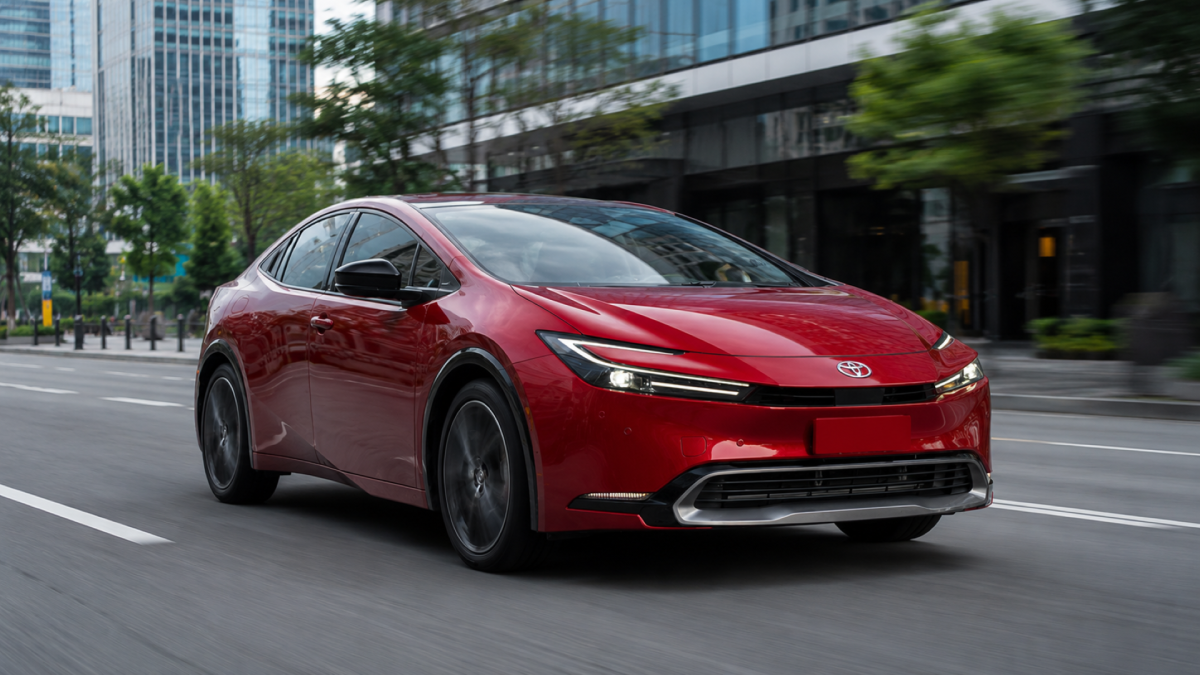
As an automotive journalist who has covered the hybrid segment for over a decade, I’ve watched the Toyota Prius evolve from a quirky eco-statement into one of the most sophisticated and desirable vehicles on the road. The 2027 Toyota Prius represents a pivotal moment in this legendary nameplate’s journey. With the current fifth-generation model having debuted in 2023, many buyers are asking: should I wait for the 2027 Toyota Prius release date, or pull the trigger on a 2026 model?
In this comprehensive guide, we’ll break down everything we know about the 2027 Toyota Prius release date, pricing, specs, and whether holding out for the new model year makes financial and practical sense.
2027 Toyota Prius Release Date: When Can You Expect It?
The 2027 Toyota Prius release date is expected to land in fall 2026, with vehicles arriving at dealerships across the United States shortly thereafter.
This timing aligns with Toyota’s typical model-year rollout schedule, where new model-year vehicles debut in the latter half of the preceding calendar year.
However, the road to the 2027 refresh hasn’t been entirely smooth. According to Automotive News, Toyota had originally planned to refresh the Prius for the 2026 model year, but production was delayed by at least a year.
This delay pushed the anticipated refresh to the 2027 model year, making the 2026 Prius essentially a carryover of the 2025 model.
For buyers currently in the market, this means two things: first, the 2026 Prius offers proven technology without the uncertainty of a new model launch; second, the 2027 refresh should bring meaningful updates that could justify the wait.
What We Know About the 2027 Refresh
While Toyota has been characteristically tight-lipped about major redesigns, official announcements from Toyota Canada and the U.S. market have confirmed several key updates for the 2027 model year.
These aren’t revolutionary changes, but rather thoughtful refinements that address real-world owner feedback.
What’s New for the 2027 Toyota Prius?
Standard Dual-Zone Climate Control
Perhaps the most universally welcomed update for 2027 is the inclusion of dual-zone automatic climate control as standard equipment across all trim levels.
Previously, this feature was reserved for higher trims or unavailable altogether. For a vehicle that families and rideshare drivers rely on daily, having separate temperature controls for driver and passenger is a quality-of-life improvement that shouldn’t be underestimated.
Enhanced Charging for Plug-In Hybrid Models
For buyers considering the 2027 Toyota Prius Plug-in Hybrid (PHEV), there’s excellent news: every PHEV model now comes standard with a dual-voltage charger capable of both Level 1 (120V) and Level 2 (240V) charging.
This eliminates the need to purchase a separate Level 2 charging cable, reducing the total cost of ownership and making home charging more convenient from day one. As someone who has tested dozens of plug-in vehicles, I can tell you that included dual-voltage charging is a feature more automakers should adopt. It removes a common friction point for first-time PHEV buyers who might otherwise be confused about charging equipment requirements.
Exterior and Interior Refinements
While the 2027 Prius retains the striking, coupe-like silhouette that debuted with the fifth generation, expect subtle exterior tweaks. Toyota may introduce new color options, wheel designs, and possibly minor fascia updates to keep the design fresh against newer competitors like the Hyundai Ioniq 6 and the growing field of electric sedans.
Inside, the 2027 Prius continues with the driver-centric cockpit layout that has earned praise for its futuristic aesthetic. The 8.0-inch touchscreen remains standard on lower trims, while the 12.3-inch display with JBL premium audio continues to anchor the Limited and XSE grades.
2027 Toyota Prius Powertrain and Performance
Hybrid (HEV) Specifications
The 2027 Toyota Prius Hybrid carries forward Toyota’s proven fifth-generation hybrid system. Here’s what you can expect:
| Specification | Front-Wheel Drive | All-Wheel Drive |
|---|---|---|
| Engine | 2.0L inline-4 | 2.0L inline-4 |
| Net Combined Horsepower | 194 hp | 196 hp |
| Transmission | eCVT | eCVT |
| EPA-Est. Combined MPG | Up to 57 MPG | Up to 54 MPG |
| 0-60 mph | 7.2 seconds | 7.0 seconds |
The 2.0-liter Atkinson-cycle four-cylinder paired with electric motors delivers genuinely spirited performance. Having driven the current-generation Prius extensively, I can confirm that the 7-second 0-60 mph time makes it feel quicker than the numbers suggest. The low center of gravity, courtesy of the TNGA-C platform, gives the Prius handling characteristics that would have been unimaginable in earlier generations.
The available Electronic On-Demand All-Wheel Drive remains a standout feature for buyers in snow-belt states. Unlike traditional AWD systems, the Prius uses a dedicated rear-mounted electric motor that activates instantly when wheel slip is detected, without the fuel economy penalty of a mechanical driveshaft.
Plug-In Hybrid (PHEV) Specifications
The 2027 Toyota Prius Plug-in Hybrid is where Toyota’s engineering truly shines:
| Specification | SE Trim | XSE Trim |
|---|---|---|
| Net Combined Horsepower | 220 hp | 220 hp |
| EPA-Est. All-Electric Range | 44 miles | 44 miles |
| EPA-Est. Combined MPGe | 127 MPGe | 127 MPGe |
| EV-Only Top Speed | 84 mph | 84 mph |
With 220 system horsepower, the Prius PHEV is the most powerful Prius ever sold. The 44-mile all-electric range is sufficient to cover the daily commute for the vast majority of American drivers, meaning many owners could go weeks without visiting a gas station. When the battery depletes, the vehicle operates as a conventional hybrid with no range anxiety.
The inclusion of the dual-voltage charger for 2027 is particularly significant here. Level 2 charging can replenish the battery in approximately 4 hours, while Level 1 charging takes roughly 11 hours—perfect for overnight top-ups.
2027 Toyota Prius Pricing and Trim Levels
Hybrid (HEV) Pricing
| Trim Level | Starting MSRP (Est.) | Key Features |
|---|---|---|
| LE | ~$28,755 | 8.0″ touchscreen, Toyota Safety Sense 3.0, 57 MPG |
| XLE | ~$31,000 | 19″ wheels, SofTex seats, wireless charging, dual-zone climate |
| Nightshade Edition | ~$32,500 | Blacked-out accents, unique wheels, dark interior |
| Limited | ~$35,500 | 12.3″ touchscreen, JBL audio, glass roof, ventilated seats |
Plug-In Hybrid (PHEV) Pricing
| Trim Level | Starting MSRP | Key Features |
|---|---|---|
| SE | $33,980 | 44-mile EV range, 220 hp, dual-voltage charger, 8.0″ touchscreen |
| XSE | $41,080 | 19″ wheels, SofTex upholstery, power seats, 12.3″ touchscreen |
| XSE Premium | ~$43,500 | Glass roof, Advanced Park, Panoramic View Monitor |
It’s worth noting that the 2027 Toyota Prius Plug-in Hybrid SE starts at $33,980, making it one of the most affordable plug-in hybrids with genuine EV capability. When federal and state tax incentives are factored in, the effective price can drop significantly. Buyers should consult the U.S. Department of Energy’s AFDC website or a tax professional to determine eligibility for the federal EV tax credit, which currently offers up to $7,500 for qualifying PHEVs.
2027 Toyota Prius Safety and Technology
Every 2027 Prius comes standard with Toyota Safety Sense 3.0, one of the most comprehensive active safety suites in the industry.
This includes:
- Pre-Collision System with Pedestrian Detection
- Full-Speed Range Dynamic Radar Cruise Control
- Lane Departure Alert with Steering Assist
- Lane Tracing Assist
- Road Sign Assist
- Automatic High Beams
- Proactive Driving Assist
Higher trims add Traffic Jam Assist, which provides hands-free driving capability in congested highway conditions when subscribed to Drive Connect.
The Advanced Park system available on Limited and XSE Premium trims can handle parallel and perpendicular parking maneuvers with minimal driver input.
From a connectivity standpoint, wireless Apple CarPlay and Android Auto are standard across the lineup, as is a five-year trial of Toyota’s connected services including Safety Connect, Service Connect, and Remote Connect.
Should You Wait for the 2027 Toyota Prius?
This is the question every prospective buyer faces. As someone who has analyzed vehicle depreciation, feature updates, and buying cycles for years, here’s my expert breakdown:
Reasons to Wait for the 2027 Model
- Dual-Zone Climate Control Standard: If you regularly drive with a passenger who prefers a different temperature, this is a meaningful upgrade.
- Dual-Voltage Charger on PHEV: Saves you the cost and hassle of purchasing separate charging equipment.
- Refreshed Styling: Even minor exterior updates help with resale value down the line.
- Latest Software: New model years typically ship with the most up-to-date infotainment software and bug fixes.
- Full Warranty Clock: A 2027 model purchased in late 2026 gives you the maximum warranty coverage period.
Reasons to Buy a 2026 Model Instead
- Immediate Availability: No waiting for the 2027 Toyota Prius release date; you can drive home today.
- Potential Discounts: As the 2027s arrive, dealers will be motivated to clear 2026 inventory.
- Proven Reliability: The fifth-generation platform has three model years of real-world data behind it.
- Minimal Mechanical Changes: The powertrain is identical; you’re not missing out on performance or efficiency.
- Same Safety Tech: Toyota Safety Sense 3.0 is already comprehensive on 2026 models.
The Verdict
If you’re specifically interested in the Prius Plug-in Hybrid, waiting for the 2027 model is strongly recommended. The included dual-voltage charger represents genuine value—aftermarket Level 2 cables can cost $300–$500, and having everything in the box simplifies ownership.
For hybrid (HEV) buyers, the decision is less clear-cut. The addition of standard dual-zone climate control is nice, but not transformative. If you can secure a significant discount on a 2026 model—say, $2,000 or more below MSRP—the savings likely outweigh the benefits of the 2027 updates.
How the 2027 Prius Stacks Up Against Competitors
The hybrid and plug-in hybrid sedan segment is more competitive than ever. Here’s how the 2027 Toyota Prius compares:
| Vehicle | Base Price | Combined MPG/MPGe | EV Range | Horsepower |
|---|---|---|---|---|
| 2027 Toyota Prius (HEV) | ~$28,755 | 57 MPG | N/A | 194 hp |
| 2027 Toyota Prius Prime (PHEV) | $33,980 | 127 MPGe | 44 miles | 220 hp |
| 2026 Hyundai Ioniq 6 | ~$42,000 | N/A | 240–361 miles (EV) | 149–320 hp |
| 2026 Honda Accord Hybrid | ~$28,000 | 48 MPG | N/A | 204 hp |
| 2026 Kia Niro PHEV | ~$35,000 | 108 MPGe | 33 miles | 180 hp |
The Prius remains the efficiency champion among hybrids, while the Prius Prime offers more EV range than the Kia Niro PHEV at a lower starting price. The Hyundai Ioniq 6 is a compelling full EV alternative, but it costs significantly more and requires access to reliable charging infrastructure.
Real-World Ownership Considerations
Having spent countless hours behind the wheel of the current Prius and spoken with dozens of owners, here are practical insights that don’t always make it into spec sheets:
Fuel Economy in Real Life: While the EPA rates the Prius LE at 57 MPG combined, real-world owners routinely report 55–60 MPG in mixed driving. The key is gentle acceleration and maximizing regenerative braking.
PHEV Charging Habits: Prius Prime owners who charge nightly report visiting gas stations as infrequently as once every two months. The 44-mile EV range covers about 80% of American commutes.
Cargo Practicality: The Prius hatchback offers 23.8 cubic feet of cargo space behind the rear seats—more than many compact SUVs. The 60/40 split-folding seats expand this significantly.
Long-Term Reliability: Toyota’s hybrid systems have demonstrated exceptional durability. The fifth-generation Prius uses a lithium-ion battery pack with an expected lifespan well beyond 150,000 miles, backed by Toyota’s 10-year/150,000-mile hybrid battery warranty.
Final Verdict: Is the 2027 Toyota Prius Worth Waiting For?
The 2027 Toyota Prius release date in fall 2026 brings a refined, thoughtfully updated version of what is already the best Prius ever made. The changes are evolutionary rather than revolutionary, but they address genuine owner needs—particularly the standard dual-zone climate control and the PHEV’s dual-voltage charger.
Wait for the 2027 model if:
- You’re buying the Prius Prime/PHEV
- You want the latest features and maximum resale value
- You’re not in urgent need of a vehicle
Buy a 2026 model if:
- You find a compelling discount
- You need a car immediately
- You’re buying the HEV and don’t mind missing the climate control upgrade