
Introduction: The Affordable Tesla That Could Change Everything
The automotive world has been buzzing with one question for years: what is the Tesla Model 2 release date? Since Elon Musk first teased a $25,000 Tesla at Battery Day in 2020, enthusiasts, industry analysts, and budget-conscious buyers have been eagerly awaiting the arrival of what could be the most transformative electric vehicle in history. As we move through 2026, the Tesla Model 2 release date remains one of the most searched topics in the EV space, and for good reason. A truly affordable Tesla could democratize electric vehicle ownership and accelerate the global transition away from internal combustion engines.
In this comprehensive guide, we will break down everything we know about the Tesla Model 2 release date, including the latest rumors, production timelines, expected specifications, pricing, and what this vehicle could mean for the future of affordable electric mobility. Whether you are a prospective buyer, an EV enthusiast, or an investor tracking Tesla’s next big move, this article covers all the essential details you need to know.
The Origin Story: From Battery Day 2020 to Today
The journey toward the Tesla Model 2 release date began on September 22, 2020, when Elon Musk took the stage at Tesla’s Battery Day event. During his presentation, Musk unveiled an ambitious vision for a compact, fully autonomous electric car priced at just $25,000. This announcement sent shockwaves through the industry, as no major automaker had successfully delivered a mass-market EV at such an aggressive price point without significant government subsidies.
However, the road to the Tesla Model 2 release date has been anything but straightforward. In the years following Battery Day, Tesla shifted its focus to scaling production of the Model Y, launching the Cybertruck, and developing its Full Self-Driving (FSD) software. During Tesla’s 2021 Annual Shareholders Meeting, Musk even stated, “Model 2 is not a car. There’s no Model 2,” clarifying that the name itself was a fan-created moniker rather than an official Tesla designation. Despite this, the project—whatever its final name may be—has remained very much alive in the background.
By 2023, reports began emerging from China suggesting that development work on the affordable Tesla was underway at the Shanghai Gigafactory. Suppliers were reportedly being contracted, and Tesla’s structural casting program was being adapted for a smaller vehicle platform. This reignited speculation about the Tesla Model 2 release date and brought renewed hope that the $25,000 Tesla was more than just a dream.
Tesla Model 2 Release Date: What the Latest Reports Say
So, when exactly can we expect the Tesla Model 2 release date? As of mid-2026, there is still no official confirmation from Tesla regarding a specific launch date. However, multiple industry reports and insider leaks provide a clearer picture of the timeline.
According to recent reports, the Tesla Model 2 could arrive in mid-2026, with production scheduled to begin in mid-2025. The initial manufacturing is expected to take place at Tesla’s Shanghai Gigafactory, which has become the company’s most efficient production facility and a testing ground for new vehicle architectures. There are also indications that production could expand to the Berlin Gigafactory and potentially a new facility in Monterrey, Mexico, to meet global demand.
Another authoritative perspective comes from Forbes, which suggests that the Tesla Model 2 may already be taking shape in the form of the Tesla Cybercab. The Cybercab, a two-passenger autonomous vehicle currently under production, is built on Tesla’s next-generation low-cost vehicle architecture. According to the report, this platform can produce both an autonomous robotaxi and a cheap commuter car. By adding a steering wheel and pedals to the Cybercab platform, Tesla could essentially create the consumer version of the Model 2. This approach would allow Tesla to scale production of the underlying architecture while navigating regulatory hurdles for full autonomy.
However, not all sources are optimistic about a near-term Tesla Model 2 release date. Some industry analysts note that as of May 2026, no official date has been announced, and production could be pushed to anywhere between late 2025 and mid-2027 depending on factory readiness and regulatory approvals.
Why the Tesla Model 2 Release Date Keeps Getting Delayed
Understanding the Tesla Model 2 release date requires an appreciation of the immense technical and economic challenges Tesla faces in building a sub-$30,000 electric vehicle. Several factors have contributed to the delays:
1. Battery Technology and Cost
The single most expensive component of any electric vehicle is the battery pack. For the Tesla Model 2 to achieve its target price, Tesla must significantly reduce battery costs without compromising range or safety. The company has been developing 4680 battery cells, which promise five times more energy capacity and six times more power than current cells. However, scaling production of these next-generation batteries has proven more difficult than anticipated.
Some reports suggest that the Model 2 might instead use LFP (Lithium Iron Phosphate) batteries or M3P batteries produced by Chinese manufacturer CATL, which offer 15% more energy density than standard LFP cells. These alternatives could provide a more cost-effective path to the target price while still delivering competitive range.
2. Manufacturing Innovation
Tesla has pioneered the use of Giga Press technology, massive casting machines that can produce large vehicle body sections in a single piece. This dramatically reduces the number of parts, assembly time, and production costs. For the Model 2, Tesla is expected to push this technology even further with an “unboxed” manufacturing process that eliminates thousands of components found in traditional vehicles. Perfecting this process takes time, and any delays in equipment installation or calibration directly impact the Tesla Model 2 release date.
3. Regulatory and Strategic Priorities
Tesla’s strategic focus has also played a role. The company has prioritized the Cybertruck launch, Model Y scaling, and FSD development over the affordable compact car. Additionally, the regulatory landscape for autonomous vehicles remains uncertain. If Tesla intends to offer the Model 2 with full self-driving capabilities, it must navigate complex approval processes in multiple jurisdictions, which could further push back the Tesla Model 2 release date.
Expected Specifications: What Will the Tesla Model 2 Offer?
While official specifications remain under wraps, industry leaks and informed speculation paint a picture of what buyers can expect when the Tesla Model 2 release date finally arrives.
Design and Body Style
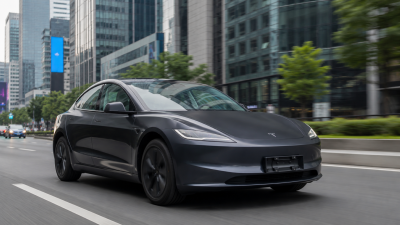
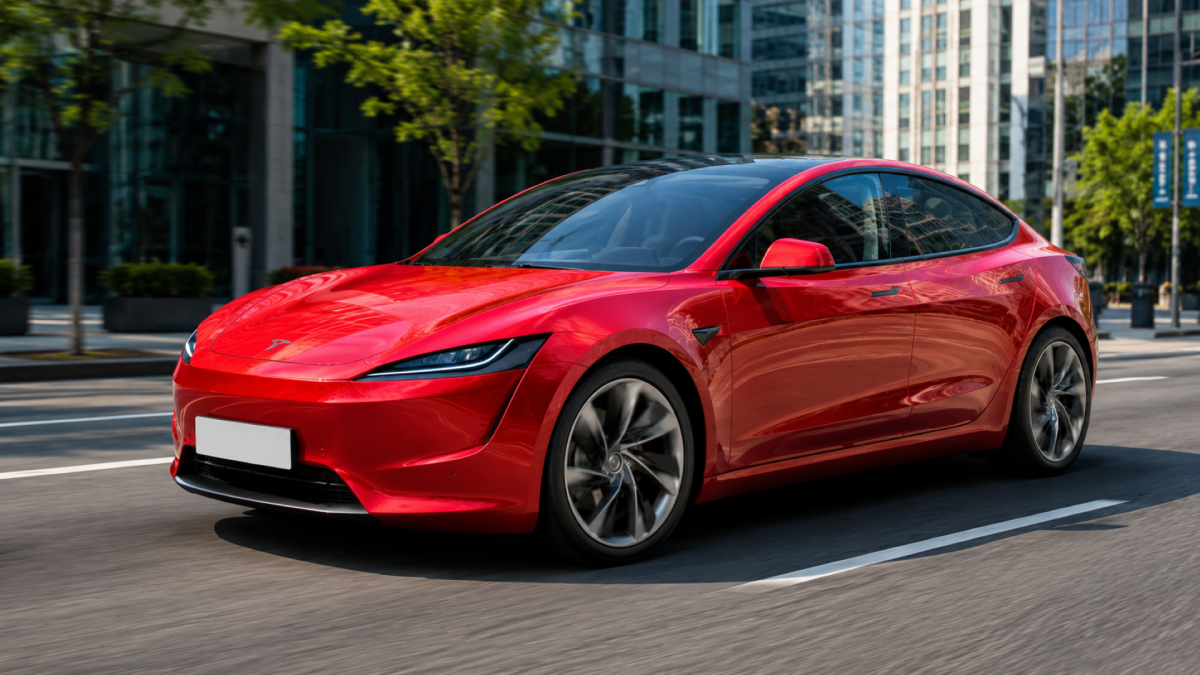
The Tesla Model 2 is expected to feature a compact hatchback or small sedan design, making it significantly smaller than the Model 3. Spy shots and renderings suggest a streamlined, aerodynamic body optimized for urban driving and efficiency. The vehicle will likely retain Tesla’s signature minimalist aesthetic, with a clean front fascia, sleek LED lighting, and a simplified interior dominated by a central touchscreen.
Some rumors indicate that the Model 2 could feature a futuristic front LED light bar and a panoramic display inside, though these details remain unconfirmed. What is certain is that Tesla will prioritize aerodynamic efficiency to maximize range from a smaller battery pack.
Battery and Range
The Tesla Model 2 is expected to come equipped with a sub-50 kWh battery pack, which would be the smallest in Tesla’s current lineup. Despite the compact battery, efficiency optimizations could deliver a range of approximately 250 to 300 miles (400 to 480 km) on a full charge, depending on the variant and driving conditions.
For comparison, the Tesla Cybercab achieves a certified efficiency of 165 Wh/mi, suggesting that the Model 2 could deliver impressive real-world range despite its smaller battery.
Performance
As a budget-friendly vehicle, the Tesla Model 2 will not match the blistering acceleration of the Model S Plaid or even the Model 3 Performance. However, it will still benefit from Tesla’s instant torque delivery. Expect a 0-60 mph time in the range of 5 to 7 seconds for the base model, with a possible Performance variant offering quicker acceleration. Top speed will likely be electronically limited to around 125 mph to preserve battery efficiency.
Interior and Technology
True to Tesla’s philosophy, the Model 2 interior will be minimalist. Expect a 15-inch central touchscreen controlling virtually all vehicle features, with no traditional gauge cluster behind the steering wheel. Standard features will likely include:
- Tesla Autopilot (basic driver assistance)
- Over-the-air software updates
- Premium connectivity options
- Heated front seats
- Basic audio system
Optional upgrades may include Full Self-Driving (FSD) capability, ventilated seats, ambient LED lighting, and enhanced audio. However, to keep the base price low, Tesla will likely strip away some of the luxury features found in the Model 3 and Model Y.
Tesla Model 2 Price: Can Tesla Really Hit $25,000?
The original $25,000 price target announced at Battery Day 2020 was ambitious even by Tesla’s standards. In the years since, global inflation, supply chain disruptions, and rising raw material costs have made that figure increasingly difficult to achieve.
Current estimates suggest the Tesla Model 2 will launch at a price point of $25,000 to $30,000 in the United States, with the final figure likely landing closer to the upper end of that range. In Europe, the target price is reportedly around €25,000. Even at $30,000, the Model 2 would undercut the current base Model 3 by nearly $10,000 and would qualify for the full $7,500 Federal EV Tax Credit in the U.S., bringing the effective cost to around $22,500 for eligible buyers.
Tesla’s strategy for achieving this price includes:
- Extreme manufacturing simplification using Giga Press and unboxed processes
- Smaller battery packs with next-generation efficiency
- Reduced interior complexity and fewer luxury features
- Software and subscription revenue offsetting lower hardware margins
Elon Musk has repeatedly stated that Tesla is willing to accept lower margins on vehicle sales if it can generate long-term revenue through FSD subscriptions, supercharging, and other software services. This business model could make the $25,000 Tesla Model 2 economically viable where traditional automakers would struggle.
The Competition: Who Is the Tesla Model 2 Up Against?
When the Tesla Model 2 release date finally arrives, it will enter a rapidly evolving competitive landscape. Several automakers are already targeting the affordable EV segment:
- Chevrolet Bolt EV / Equinox EV: GM’s Bolt offers around 250 miles of range for approximately $27,000, while the Equinox EV targets the $30,000 price point with over 300 miles of range.
- Volkswagen ID.2: Expected to launch around €25,000 in Europe, the ID.2 will be a direct competitor in the compact hatchback segment.
- Renault 4 E-Tech: Another European contender in the affordable EV space.
- BYD Dolphin / Seagull: Chinese automaker BYD has already proven that sub-$20,000 EVs are possible, though these vehicles are not yet widely available in Western markets.
Tesla’s advantages will include its Supercharger network, over-the-air update capability, brand prestige, and potential FSD functionality. However, the competition is fierce, and the Tesla Model 2 release date cannot come soon enough for Tesla to establish dominance in this segment.
Should You Wait for the Tesla Model 2 Release Date?
If you are in the market for an affordable electric vehicle today, the question of whether to wait for the Tesla Model 2 release date is a valid one. Based on current information:
- If you need a car immediately, the Tesla Model 2 is not a viable option. With no confirmed release date and production potentially not starting until late 2025 or 2026, waiting could mean being without a vehicle for a year or more.
- If you can wait 12-24 months, the Model 2 could be worth holding out for, especially if Tesla manages to deliver on its price and range promises.
- If you want a Tesla now but cannot afford a Model 3, consider a used Model 3 or Model Y, which can often be found in the $30,000 to $40,000 range.
It is also worth noting that some sources suggest the Tesla Model 2 project may have been effectively replaced or absorbed by the Cybercab platform. If this proves true, the “Model 2” may arrive not as a standalone vehicle but as a consumer version of the Cybercab with a steering wheel and pedals.
Conclusion: The Tesla Model 2 Release Date Remains the EV World’s Biggest Question
The Tesla Model 2 release date is more than just a calendar entry—it represents a potential inflection point for the entire electric vehicle industry. A truly affordable, mass-market Tesla could accelerate EV adoption among mainstream consumers who have been priced out of the current lineup. It could force legacy automakers to slash prices on their own budget EVs. And it could cement Tesla’s position as the undisputed leader in electric mobility for years to come.
As of mid-2026, the most credible estimates point to a Tesla Model 2 release date in mid-to-late 2026, with production beginning in 2025. However, Tesla’s history of missing ambitious deadlines means that buyers should remain cautiously optimistic. Whether the vehicle arrives as a standalone “Model 2” or as a consumer adaptation of the Cybercab platform, one thing is clear: Tesla is committed to bringing affordable electric mobility to the masses.
For now, all eyes remain on Elon Musk and Tesla’s next moves. The Tesla Model 2 release date may still be uncertain, but the anticipation continues to build—and when it finally arrives, it could change everything.